
About SCANLOX
SCANLOX was founded in 2020 with a clear objective: to deliver significant value to our customers through innovative automation solutions.
We proudly represent some of Europe’s leading suppliers and developers of Autonomous Mobile Robots (AMRs), Intelligent Mobile Robots (IMRs), Automated Guided Vehicles (AGVs), safety systems, and automated picking solutions.
Get a quick overview of SCANLOX in our brand notecard.
Get to Know Us a Little Better
The inspiration for SCANLOX—a Danish company based on the island of Funen—dates back to 2016, when industry pioneers such as AGILOX and WEWO introduced groundbreaking products that elevated the standard for automation, particularly within internal logistics.
The core of our approach is built on the principles of simplicity and flexibility. We combine cutting-edge technology with user-friendly solutions that are as intuitive as plugging in a mobile phone, ensuring safe and easy system access.
We take pride in implementing solutions quickly and efficiently while granting our customers the freedom to adjust and expand their systems independently as their operational needs evolve.
As SCANLOX grows, we remain curious and dedicated to exploring new ideas and deploying the latest technologies. Our goal is to unite automation, safety, and logistics with the specific requirements of our clients in an industry and a world that are constantly changing.

Our Vision & Mission
Vision
To create and deliver value to our customers’ intralogistics operations across Scandinavia.
Mission
At SCANLOX, we optimize business operations and productivity using mobile robots and advanced automation. We free up time and resources through efficient automation, enabling employees to focus on value-adding tasks.
Through a flexible approach and close customer collaboration, we deliver solutions that fit precisely into daily operations and secure measurable results.
Our Office
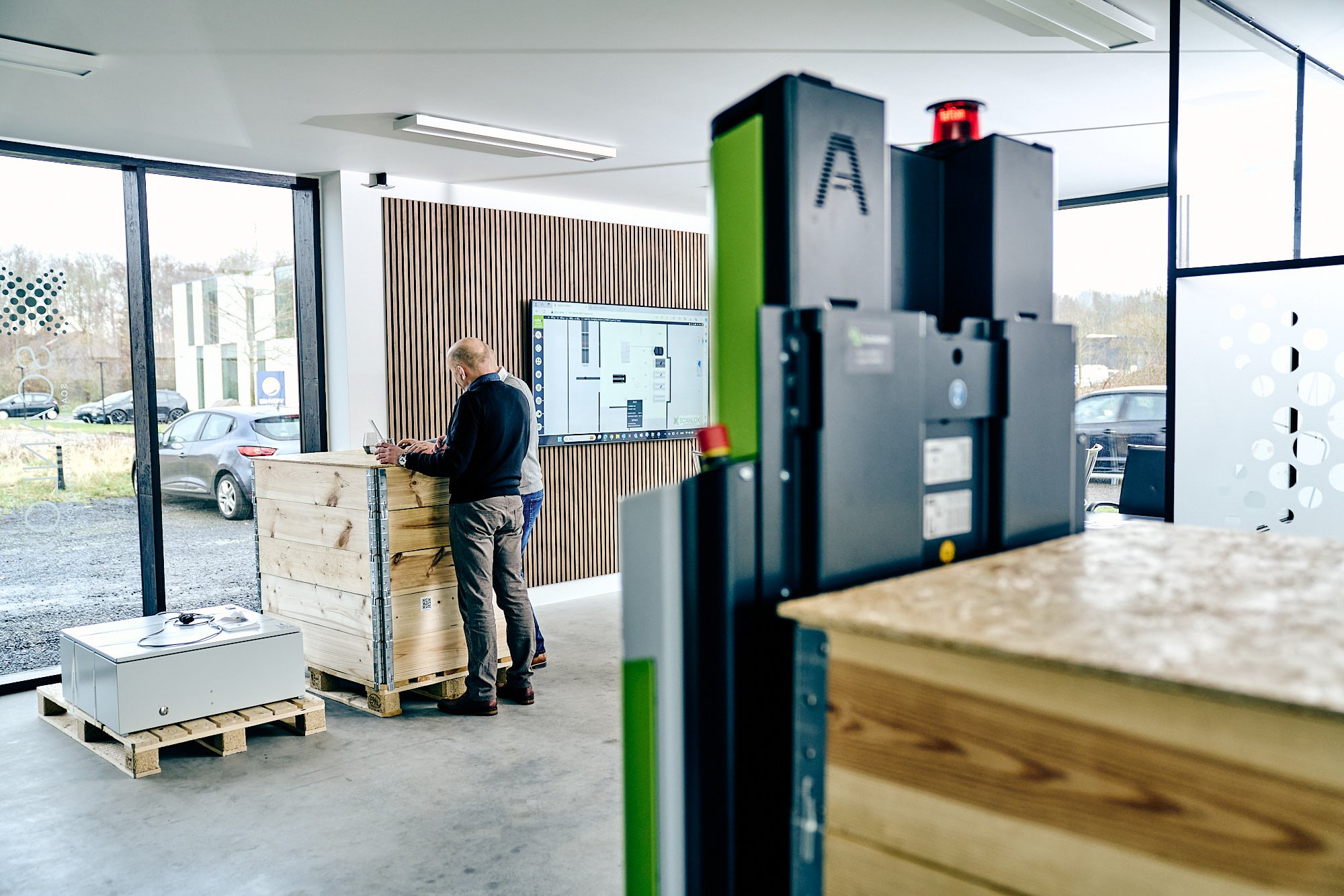
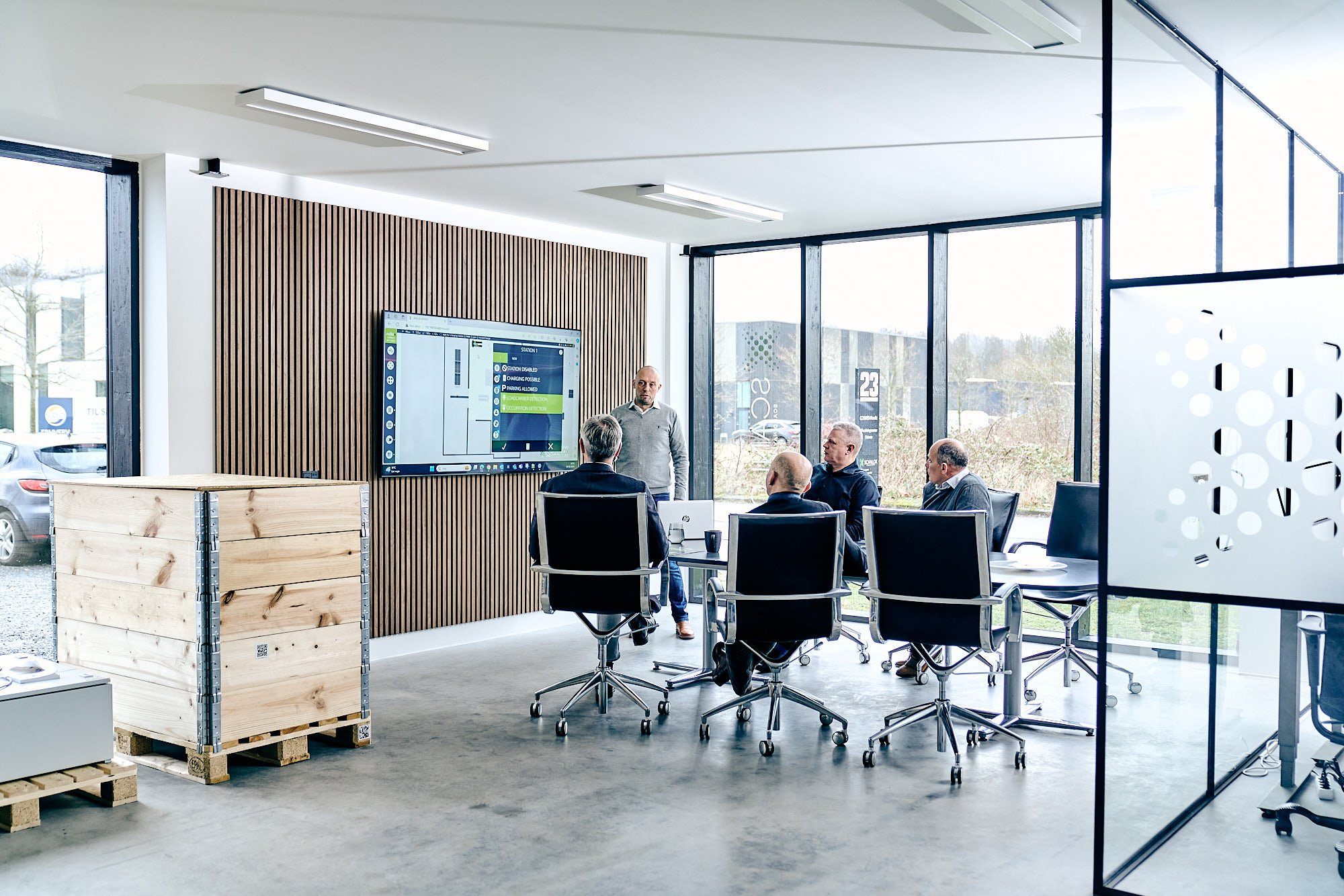
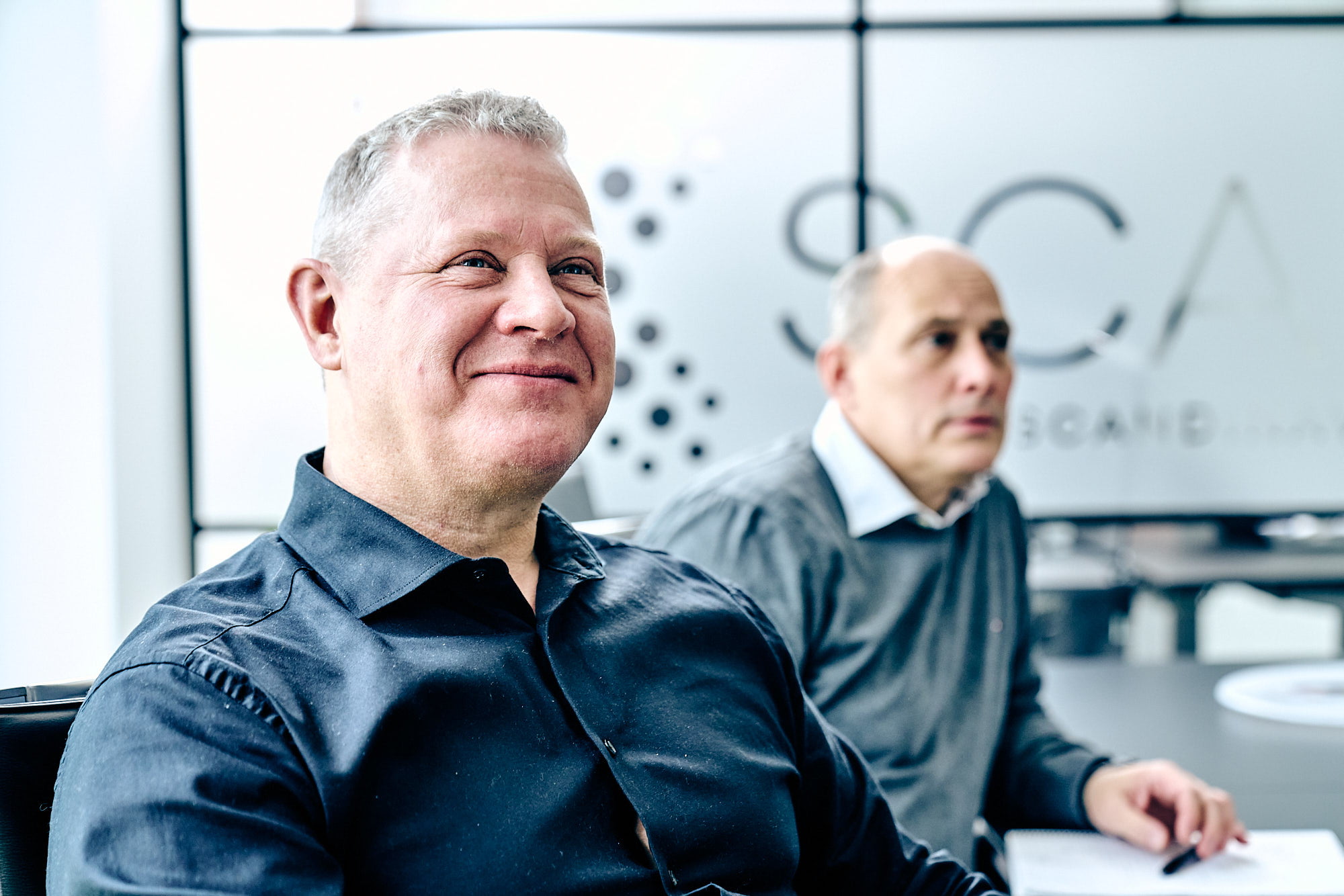
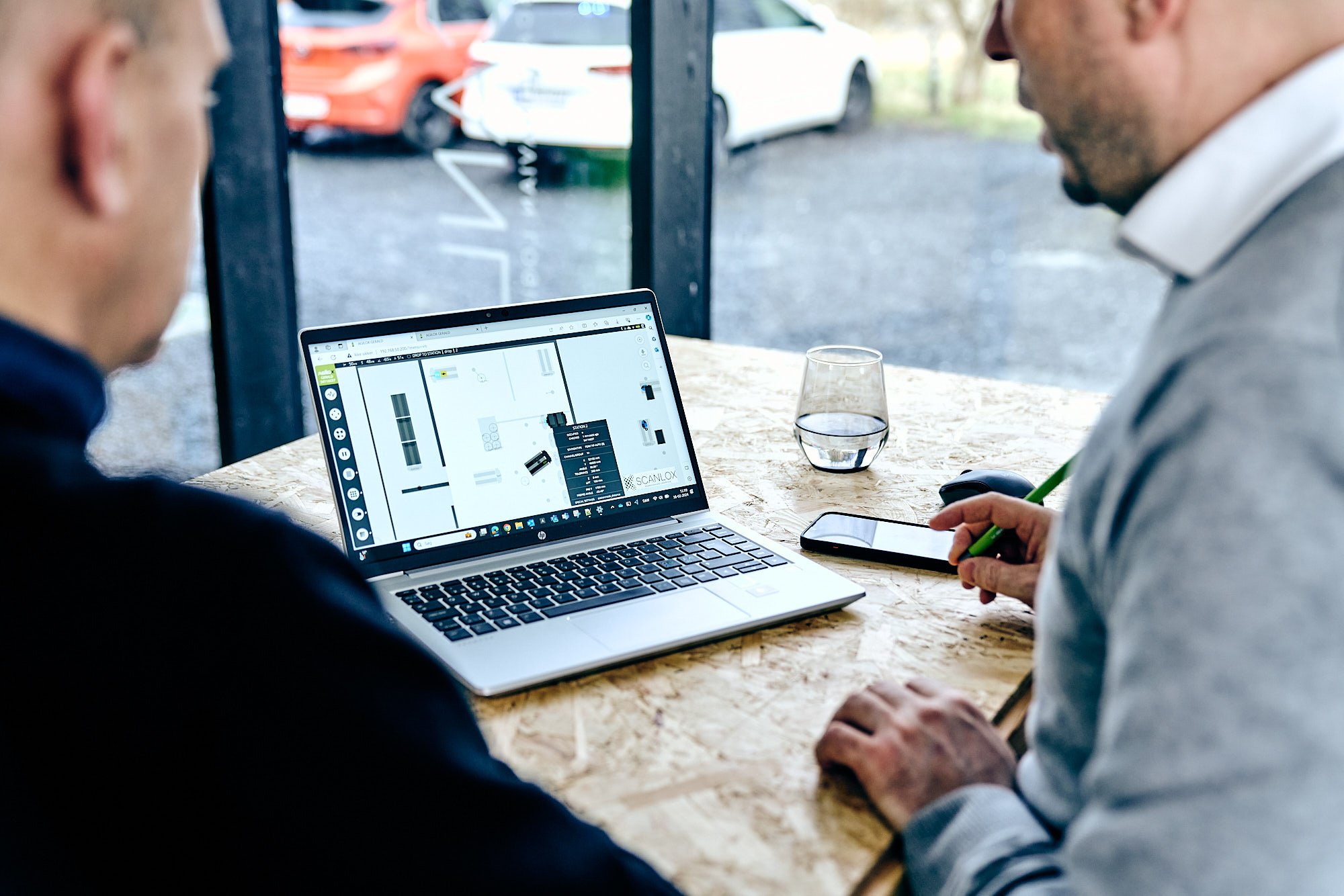
Get a visual impression of our working environment and office in Odense.



Our Environmental Footprint
Reducing our environmental impact and contributing to a sustainable future is among our most vital responsibilities.

Our product portfolio is a tangible expression of this green ambition. AMRs and AGVs consume less than half the energy of traditional forklifts and stackers, which simultaneously lowers operational costs and drives efficiency.
Furthermore, we recycle spare parts through our suppliers, actively promoting a circular economy. This practice reduces energy consumption and cuts CO₂ emissions, supporting global climate targets.
We also utilize modern digital workflows to limit our environmental footprint. We have virtually eliminated the use of paper and printer toner by optimizing our work processes digitally. Online meetings not only save time but also reduce travel and emissions, benefiting both our team and our customers.
Our Core Values
The core values that shape our vision.
Work Smarter, Not Harder
We believe that automating repetitive tasks is the key to efficient operations, freeing up human resources for strategic purposes.
Innovation-Driven Solutions
We constantly strive to push the boundaries of what robotic technology and automation can achieve, delivering solutions that transform and improve the industry.
Customer Collaboration in Focus
We value close dialogue and long-term relationships. By deeply understanding our customers’ needs, we create tailored solutions with a genuine impact.
Safety at the Center
Safety is a foundational element in all our solutions. We integrate safety lighting and intelligent cameras so that both production and logistics can proceed safely and efficiently.
Integrity and Transparency
We operate under the highest standards of integrity. Honesty and openness form the foundation of our relationships, both internally and externally.
Agility and Adaptability
In a fast-paced technological world, we respond quickly and flexibly to changes in customer demands and market conditions.
The Team Behind SCANLOX
The dedicated people driving our mission forward.


Download Our Visual Identity Brochure
At SCANLOX, we have developed a unified visual identity that strengthens our brand and ensures a consistent appearance across all platforms. This reflects our commitment to innovation, quality, and reliability, guaranteeing clear and professional communication for both customers and partners.
Our design guide, which outlines these visual guidelines, is available to anyone who needs it.
Frequently Asked Questions
Our FAQ section provides quick answers to the most common questions regarding our products, services, and solutions, helping clarify general inquiries quickly and conveniently. If you do not find the answer to your specific question here, you are always welcome to contact us.
What is the difference between AMR and AGV?

The basics
AMR stands for Autonomous Mobile Robot, while AGV stands for Automated Guided Vehicle. Both technologies support automation, but they offer different advantages.
Navigation capabilities
AGVs follow fixed routes using sensors, magnetic strips, or wires in the floor, making them suitable for predictable pathways. However, this limits flexibility when layouts change.
AMRs use advanced sensors, cameras, and onboard computing to navigate complex environments. They are ideal for dynamic routes commonly found in warehouses and distribution centers, offering high flexibility.
Use cases and scalability
AGVs are often used for high-volume tasks such as pallet transport in production environments. Once the infrastructure is in place, they operate consistently and efficiently, making them well suited for stable workflows.
AMRs are better suited for changing requirements and environments with seasonal fluctuations or frequently updated layouts. Their flexible navigation makes them ideal for manufacturing, e-commerce, and dynamic logistics environments.
Safety and responsiveness
AGVs are equipped with reliable sensors and stop when encountering obstacles, but they cannot reroute themselves and require manual intervention.
AMRs respond in real time to environmental changes and are therefore well suited for areas with high human interaction. They provide high safety without compromising efficiency.
Costs
The purchase price of AGVs and AMRs is often similar, but AMRs can be more cost-efficient in the long term.
AGVs typically have lower hardware costs, but software and implementation make up a larger share of total expenses. AMRs may have a higher unit price, but lower software and deployment costs, making them a more economical choice for many automation projects.
What requirements apply to internal environments?
Our automation solutions are designed to meet a wide range of production and logistics needs across industries. However, environmental requirements depend on the selected AMR or AGV model.
- AGILOX performs best on smooth, level floors and offers high flexibility in facilities where layouts frequently change. The solution requires Wi-Fi, a stable power supply, and integration with the fire alarm system. It is important that the environment is not humid, as AGILOX is not designed for wet conditions.
- WEWO is built for more robust environments. Its larger wheels ensure stable operation on uneven floors. Wi-Fi, power supply, and fire alarm integration are also required here. Please note that WEWO is not intended for humid environments as standard, unless stainless steel variants are used, which are specifically designed for such conditions.
What benefits do AMR and AGV robots provide?
They save time, improve safety, and ensure more stable operations, as the robots can work around the clock without breaks.
What does automation mean for employees?
In short, it is about changing the nature of work, not removing people from it.
When automation and robots are introduced, they take over repetitive, physically demanding, and often monotonous tasks. These are typically tasks that strain the body and offer limited professional variation. Employees are not replaced, but instead have time and energy freed up.
This freed-up time can be used for tasks where human judgment, experience, and overview are essential. This includes troubleshooting, quality control, planning, optimization, and cross-functional collaboration. Humans remain essential here, as evaluation, adaptation, and decision-making cannot be standardized in the same way as repetitive tasks.
Can robots operate in the same environment as humans?
Yes, modern solutions are designed for so called collaborative use, where robots safely operate alongside both people and other robots.
Is automation only for large companies?
No, today even small and medium sized companies can benefit from AMR and AGV solutions, as the technology has become more flexible and adaptable to different needs. Installation and setup can be done without major changes to production or warehouse layouts, and system control is more user friendly than before.
There are also public grant schemes such as SMV:Digital, which can provide funding to test automation for up to 3 months. This allows companies to trial the technology in their own environment, creating a solid foundation for a later investment.
Learn more about how you can apply for a 125,000 DKK grant here.
Can automation pay off?
Yes, in many cases investment in robots can pay for itself within a few years, as production becomes faster and more efficient.
How is ROI calculated, and what is the typical payback time?
An ROI calculation (Return on Investment) typically takes into account the initial investment, operational savings, maintenance costs, and efficiency gains over time.
For companies operating a single shift, the payback period is typically around 2 years, while for two or three shift operations it is often as low as 1 year. The exact calculation is done by the customer, as it depends on operational parameters and expected benefits.
Formula:
ROI = (Net profit / Investment cost) × 100
What financing options are available?
We offer flexible financing options. You can either pay the full amount upfront or enter into a leasing agreement. We cooperate with leasing companies to provide tailored leasing solutions that fit your company’s financial setup and strategy.
What is the delivery time?
Delivery times are carefully planned and aligned with the project timeline. By ensuring clear and open communication from the start, we can define realistic and achievable delivery dates that match your operational needs.
What type of batteries are used in the machines?
AGILOX uses a high efficiency lithium iron phosphate battery (LiFePO4), based on lithium ion cells. In the event of a fire, this battery can be extinguished with a dry powder extinguisher, which provides additional safety.
WEWO uses lithium ion batteries and therefore requires specific safety measures. These are implemented to ensure operational stability and high safety, even in demanding environments.
What is the energy consumption of our solutions?
Our AGILOX AMR and WEWO AGV are designed with energy efficiency in mind. They use less than half the energy of traditional stacker forklifts, reducing both operating costs and environmental impact.
By choosing our automated solutions, you can streamline operations while lowering your CO₂ footprint, making them an ideal choice for companies focused on sustainability.
What training is provided during setup and operation?
Training and setup vary depending on the specific machine.
- For AGILOX, a one day administrator course is offered where setup and operation are covered at multiple levels. This equips key personnel to independently manage the system and make adjustments when needed.
- For WEWO, setup and configuration are typically handled by our own team, as the system is more complex. In some cases, key customer personnel can be trained in selected functions, but this is agreed individually and may require additional sessions.
The goal is to ensure the systems operate optimally and are tailored to the company’s needs.
Learn more about training, service, and support here.
What do you do if the machine stops?
If the unexpected happens and the machine stops, different procedures apply depending on the type.
- AGILOX can be moved using ICOS-S1 lifting equipment. The machine can also be switched to manual mode and controlled via tablet or mobile, making it easy to maneuver without automated functions.
- WEWO is equipped with a removable controller that enables manual operation. Alternatively, a forklift can be used to move the machine.
Proud Supplier to
We deliver automation solutions to some of the industry’s largest players.


